The QuickBooks Breaking Point: How MAG Builders Built A Foundation To Scale
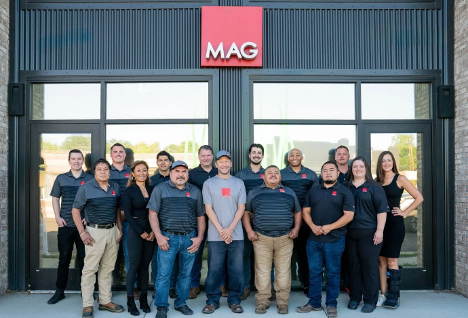
For MAG Builders, that moment showed up in a way that'll sound familiar to any builder trying to scale. Their accounting reality wasn't one QuickBooks file. It was forty-five active QuickBooks files at the same time, each tied to a development, each with its own workflow, and each pulling the team further away from consolidated clarity.
This is the story of how a 25-year construction firm in the Denver market replaced that maze with a single platform built to support growth. It's not a tale about buying shiny software. It's a practical look at what changes when you treat financial infrastructure like a foundation, not an afterthought.
The Real Issue: File Sprawl Kills Visibility
QuickBooks has helped many contractors get off the ground. It's familiar, it's quick to start, and for a long time, it can feel "good enough." The problem is that construction growth doesn't look like growth in many other industries. It's not one steady line of sales. It's a mix of entities, projects, phases, cost codes, draws, vendors, and field decisions that need to appear in the financial picture quickly.

MAG Builders grew from high-quality residential work into complex commercial and development projects. With each new development came a new QuickBooks file. That might feel manageable at first, especially if each file stays small and the team stays tight. Then the company hits the point where multiple developments overlap, more doors are in motion, and leadership needs a single view of performance across everything.
At forty-five files, the issue wasn't only administrative. It was strategic. A lack of consolidated visibility slows decision-making and creates risks that don't show up until it's too late. MAG Builders described month-end consolidation as a nightmare, and that's the right word for it. Consolidation isn't a report in that setup. It's manual work, repeated steps, and constant context switching.
Here's what file sprawl tends to create for builders and developers:
- Month-end close becomes longer, messier, and harder to trust.
- Job performance is seen weeks or months after the field has made the decisions.
- Leaders start managing based on partial information.
- The accounting team spends time moving data instead of analyzing it.
- Profit fade can hide until after the job is complete.
MAG Builders put it plainly: sometimes they didn't realize a project had lost money until months after it closed. At that point, there's nothing you can do to course-correct. You can only document the loss and hope it doesn't repeat on the next job.
The Stakes: Scaling From 20–30 Doors To 500 Homes
The pressure point wasn't theoretical. MAG Builders had a clear growth plan. They wanted to scale from roughly 20 to 30 doors per year to more than 500 homes across multiple developments within two years. That's not "a little more volume." That's a new operating model.
When a builder starts moving at that pace, complexity compounds. More doors mean more vendors. More vendors mean more invoices. More invoices mean more approvals, more coding, more chances for delay, and more room for error. Add multi-phase developments and draw processes on top of that, and the finance team can't rely on last month's numbers to steer this month's work.
What's more, growth changes the questions leadership asks. Instead of "Are we profitable?" the question becomes "Where are we profitable, and where are we drifting?" That requires project-level visibility that's current, consistent, and tied to real budgets and cost codes. It also requires consolidation across entities without eating up the team's time.
MAG Builders reached the point where upgrading a tool wasn't enough. They needed financial infrastructure that could support the business they were becoming, not the business they used to be.
Choosing A System For Where You're Going
Many construction companies shop for systems based on current pain points. That's understandable, because the pain is loud. The month-end is late. The AP inbox is overflowing. PMs want answers, and accounting is stuck reconciling. In that moment, it's tempting to pick a solution that patches the problem right in front of you.
MAG Builders took a different approach, driven in part by the perspective of Chris Booker, who joined as Controller and later became CFO. With a public accounting background and prior exposure to larger platforms, he'd seen what enterprise-grade financial infrastructure looks like. He'd also seen what happens when companies put off the decision and keep stacking workarounds.
They evaluated multiple options, including Sage, QuickBooks' own enterprise ERP path, and NetSuite. The key point wasn't that QuickBooks is "bad." The point was that it wasn't designed for what MAG Builders planned to do next. They needed a system that could handle scale without multiplying files, processes, or risk.
Their decision logic is worth borrowing. They didn't ask, "What fixes today?" They asked, "What supports the next five years?" From there, the requirements become clearer:
- Consolidation across entities and developments needs to be native, not manual.
- Project financials must be accessible at the job level, not buried in after-the-fact reporting.
- Automation has to reduce repetitive work, not add more steps.
- The data structure needs to support growth without a rebuild every year.
NetSuite checked the scalability box. Still, scalability alone doesn't guarantee a fit for construction. That's where the next piece mattered most.
Why NetSuite Plus BlueCollar Projects Was The Tipping Point
Construction accounting can't live only in finance theory. It has to match how jobs run. Budgets live at the project level. Cost codes need to mean the same thing across every job. Draws and funding processes have their own cadence. PMs and supers need visibility that makes sense in the field, not just in a controller's office.
MAG Builders said the tipping point was BlueCollar Projects, the construction-specific implementation layer built natively on NetSuite. They hadn't seen anything so tailored to how they worked, especially around loan and draw processes and seeing budgets versus actuals at the project level.
That distinction matters. Plenty of platforms can hold numbers. The real question is whether the system mirrors your operational reality, or whether your team has to bend its workflows to fit the software. If the software forces the business to "work around it," the workarounds become permanent. They become spreadsheets, shadow systems, and side conversations that pull the team away from a single source of truth.
For builders and developers, the "construction layer" needs to support what actually happens:
- A job structure that aligns with cost codes and phases.
- Visibility into budget vs actuals that's timely enough to act on.
- Processes that account for development funding and draws.
- Reporting that can be trusted across multiple projects and entities.
This is also where the conversation shifts from "software selection" to "operating model." MAG Builders weren't buying a database. They were putting in place a system that would shape how teams plan, approve, report, and course-correct. They wanted a platform that could become truly theirs as the company scaled.
If you're searching for a QuickBooks alternative for contractors, that's the real litmus test. The right replacement isn't the one that looks familiar. It's the one that holds up as complexity grows, without dragging the team into more manual work.
Implementation: Doing It Right The First Time
MAG Builders went live after a 10-month implementation. In construction, speed is often celebrated. In ERP, speed without structure leads teams to end up with a bigger version of the same problems. MAG Builders treated implementation like a chance to get the foundation right, because they understood a basic truth: bad structure scales bad outcomes.
They focused heavily on the chart of accounts design, cost codes, and data structure before go-live. That's not glamorous work, but it's the work that determines whether the system will help or frustrate everyone for years to come. If the cost code structure is inconsistent, budget vs actuals becomes unreliable. If the COA isn't built for the reporting you need, every report becomes a custom project.
They also recognized that a successful implementation can't end with finance feeling good about the system. Construction companies win or lose in the field. If PMs and superintendents can't use the system confidently, adoption stalls and reporting breaks down. MAG Builders made space for team members to raise their hands and say they didn't understand something yet, and they didn't move forward until people were comfortable.
That approach is a lesson for any builder considering an ERP project. The goal isn't to install software. The goal is to create shared confidence in how the business tracks money at the job level.
Here are a few implementation moves that often separate strong outcomes from messy ones:
- Standardize cost codes and job structure before migration begins.
- Build the COA for the reports leadership will need as the company grows.
- Treat training as part of the project, not a final-week task.
- Align finance and operations on what "done" looks like for approvals and coding.
- Use implementation as a process review, not a copy-paste of old habits.
MAG Builders also used the project to question long-running processes that had been on autopilot for a decade. That's the right mindset. New systems expose old assumptions. If you take the opportunity to refine workflows, you get more than a system change. You get an operating upgrade.
Results: Four Months Live, And The Business Feels Different
MAG Builders went live in early 2025, and within four months, they were already seeing tangible results. That timeline matters because it shows how quickly changes occur once the foundation is in place. This wasn't a "maybe someday" payoff. It was a practical shift in what the team could see and do week to week.
The first major win was real-time visibility into projects. Instead of learning after the fact that a phase drifted off budget, they could see overruns as they were happening. That changes behavior. It turns job financials into a steering wheel, not a rearview mirror. The team could spot a cost overrun in one phase and start asking where they could recoup costs in the next.
This kind of clarity is what people mean when they talk about job costing, but it only works if the structure is set up correctly and the data are current. It also requires the organization to trust what it sees. Once trust is there, conversations improve across departments because everyone is looking at the same picture.
The second major win was accounts payable automation. Before the change, their AP processor manually entered invoices one by one, with volume exceeding 1,000 invoices per week. That's a workload that traps talent in data entry. After go-live, bill capture automation handled much of that volume, freeing time for higher-value work.
That's not only a productivity story. It's a capacity story. When you remove repetitive tasks, the team can focus on controls, analysis, and operational support. It also reduces the risk that invoices get stuck in an inbox while the field waits for answers.
The third win was the bigger one: a foundation for rapid scale. With a single platform serving as the single source of truth across projects and entities, MAG Builders created an environment where growth didn't automatically mean more files and more workarounds. They also recognized they'd only scratched the surface of what automation could do for them.
In a growing construction business, that's the real value. You don't want a system you outgrow every few years. You want a platform that gets stronger as you refine workflows and add automation.
| Outcome | What Changed | Why It Matters |
|---|---|---|
| Real-Time Project Visibility | Project teams could see budget drift and phase-level overruns while work was still in progress, not weeks after the fact. That turned job financials into a live management tool instead of a post-close report. | Issues surfaced early enough to correct course, recover in later phases, and align finance and operations around a single, trusted view of performance. Job costing only delivers this value when structure is clean and data stays current. |
| Accounts Payable Automation | Manual invoice entry was reduced significantly through automated bill capture, even with invoice volume exceeding 1,000 per week. The AP team shifted from repetitive keying to exception handling and review. | Faster processing improves cost visibility and reduces bottlenecks for the field. It also frees staff capacity for controls, analysis, and operational support instead of data entry. |
| Foundation For Rapid Scale | A single platform became the source of truth across projects and entities, reducing the need for separate files and workarounds. The team also identified additional automation opportunities still on the roadmap. | Growth no longer forces more complexity in reporting and consolidation. With fewer disconnected systems, leadership gets clearer answers faster and can scale without multiplying administrative overhead. |
Here's what these results tend to look like in day-to-day terms:
- Leadership gets current visibility into project performance.
- Finance spends less time consolidating and more time advising.
- AP cycles speed up, and errors drop.
- PMs and accounting align faster because the numbers are shared.
- Growth planning gets easier because the system supports it.
If your team is considering a construction ERP implementation, these are the kinds of early wins that signal the project is on the right track. They show that the business is moving from reactive to proactive, without relying on heroics or spreadsheets.
What Construction Finance Leaders Can Learn From MAG Builders
MAG Builders offered two pieces of simple, direct advice worth repeating because they cut through the noise.
First, before you buy anything, plan for where the company needs to be in three to five years. Don't select a system that only solves today's problem. If the plan includes more entities, more developments, more phases, and more invoice volume, then the system needs to handle those realities now, not after the next breaking point.
Second, during implementation, lean in. Ask every question. If something feels unclear, don't let it slide just because it's tedious. Those questions are the difference between a smooth go-live and months of frustration. Every question asked in implementation is usually a problem avoided after go-live.
There's also an implied third lesson: the structure is the strategy. The chart of accounts, cost code standards, and job structure aren't accounting trivia. They are the foundation for visibility and decision-making. If you get them right, reports become reliable. If you get them wrong, the system becomes another place to store numbers without confidence.
For teams that have lived in dozens of QuickBooks files, this shift can feel like stepping into a new level of control. It doesn't remove the challenges of construction. It does give you the financial view you need to manage those challenges in real time.
| Lesson | What To Do | Why It Pays Off |
|---|---|---|
| Buy For The 3–5 Year Plan | Start with where the business needs to be in three to five years, then work backward. Choose a system that can support more entities, more developments, more phases, and higher invoice volume without breaking. | You avoid paying twice: once for a short-term fix and again for a replacement when growth exposes the limits. The right platform keeps up as complexity increases, instead of forcing new workarounds. |
| Lean In During Implementation | Ask every question and resolve every point of confusion, even if it feels minor or tedious. Treat clarity as a requirement, not a nice-to-have. | Questions answered early prevent months of frustration after go-live. A smoother launch means faster adoption and fewer costly process gaps. |
| Structure Is The Strategy | Build a clean foundation with a solid chart of accounts, consistent cost code standards, and a job structure that matches how projects run. Make sure teams can trust what the system is showing. | When structure is right, reporting becomes reliable and decisions can be made in real time. When structure is wrong, you end up with a bigger database that still doesn't provide confidence. |
Construction ERP Built For Real Work, Not Workarounds
Construction companies don't need more software. They need fewer workarounds. Workarounds show up as duplicate data entry, conflicting spreadsheets, and endless reconciliation. They also show up as delayed visibility, where problems get identified after the job is complete.
MAG Builders' story is a blueprint for avoiding that trap. They moved from a fragmented system to a single platform and paired NetSuite's scale with a construction-native approach through BlueCollar Projects. The payoff wasn't only cleaner accounting. The payoff was the ability to see job performance sooner, act faster, and build a foundation that supports growth.
If you're still stitching together reports across multiple files, the "breaking point" might already be behind you. The good news is that replacing chaos with clarity is possible, and it starts with the same choice MAG Builders made: build for the business you're becoming.
If you want to talk through what that looks like for your company, BlueCollar Cloud can help map the path from file sprawl to a single source of truth, with an implementation approach that respects how construction really works.
Closing And Next Step
MAG Builders didn't replace forty-five QuickBooks files because it sounded nice. They did it because the business they were building required real-time clarity, consistent structure, and a platform that wouldn't crack under growth. They chose a path that started with the future and worked backward, and the early results validated the approach.
If your team is approaching the same breaking point, let's talk it through how NetSuite and BlueCollar can help your business scale without breaking a sweat. Learn more here: https://home.bluecollar.cloud/netsuite-construction-software
Frequently Asked Questions: QuickBooks Alternatives in Construction
What Are The Biggest Signs A Contractor Has Outgrown QuickBooks?
If you're running multiple entities or developments and each one needs its own file, that's a major warning sign. Another red flag is when consolidation takes days and still feels unreliable. Late month-end closes, heavy reliance on spreadsheets, and delayed job performance insights usually show up together. If you're finding margin issues after closeout, the system isn't supporting the way you manage projects.
How Many QuickBooks Files Is Too Many For A Construction Company?
There isn't a magic number, but the pattern matters more than the count. If each new development requires a new file, the workload grows faster than the business can keep up. Even a handful of files can cause problems if leadership needs consolidated reporting and project-level visibility. Once switching between files becomes part of daily work, it's time to evaluate a single-platform approach.
Why Do Builders Struggle To Get Real-Time Job Visibility In Entry-Level Accounting Systems?
Most entry-level systems weren't built around project structures, cost code standards, and field-driven workflows. They can store transactions, yet they often struggle to provide timely budget vs actual reporting at the job level. In addition, data consistency breaks down when different projects use different coding approaches. Real-time visibility depends on structure, automation, and cross-team adoption.
What Makes An ERP Implementation Successful In Construction?
A successful implementation starts with a clean structure: a chart of accounts, cost codes, and job setup that match how your business runs. Training and adoption matter just as much as configuration, especially for PMs and field leaders. It also helps to treat implementation as an opportunity to improve processes, not to replicate old habits. The teams that ask more questions early tend to have fewer issues after go-live.
How Long Does A Construction ERP Implementation Usually Take?
Timelines depend on complexity, data readiness, and the number of entities and workflows involved. Some companies move quickly, while others choose a longer timeline to get structure and data right. A longer implementation isn't automatically a problem if it's used to reduce risk and improve adoption. The best measure is whether go-live produces trusted reporting and smoother workflows soon after.
Can Accounts Payable Automation Really Make A Difference For Builders?
Yes, especially for companies processing high volumes of invoices across many jobs. Automation can reduce manual data entry, speed up approvals, and reduce the risk of coding errors. It also frees accounting staff to focus on controls and analysis rather than on repetitive tasks. The result is often better visibility into costs and fewer bottlenecks between the field and finance.
What Should I Look For In A QuickBooks Alternative For Contractors?
Start with consolidation and project-level visibility, because those are often the first pain points as you grow. You'll also want strong job costing, consistent handling of cost codes, and workflows that match construction operations. Automation should reduce workload, not add more steps for the field. Finally, look for an implementation partner that understands construction, not just accounting software.
Is NetSuite A Good Fit For Growing Construction And Development Firms?
NetSuite can be a strong fit for companies that need scalability, multi-entity consolidation, and an automated platform. The key is to pair it with a construction-specific approach, so that job costing, budgets, and workflows align with how projects run. Many teams benefit most when project visibility improves early, and AP workload drops. A thoughtful setup and adoption plan are what make the system pay off.
How Do I Know If My Company Is Ready To Start An ERP Project?
You're ready if growth is outpacing your ability to get timely, trusted numbers. If the team relies on spreadsheets to reconcile reality, or if month-end keeps getting pushed out, those are strong signals. It also helps if leadership is aligned on why the change matters and is willing to invest in structure, training, and process improvement. Readiness isn't perfection; it's commitment to doing it right.